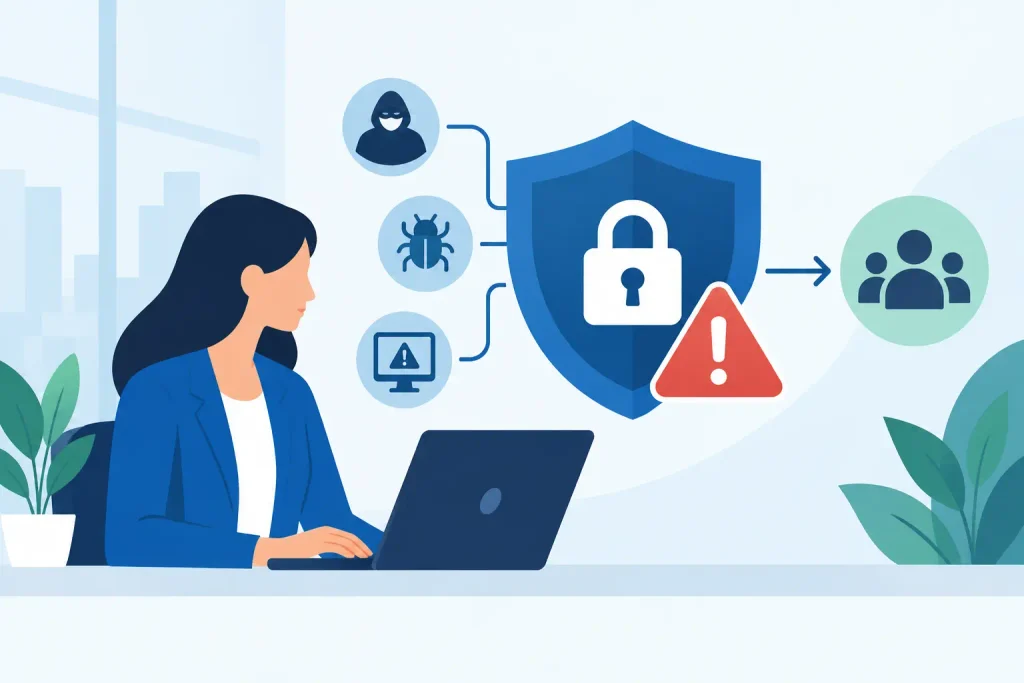
A concerning comment in a break room, a troubling social media post, repeated unwanted contact, or a person attempting to bypass security procedures may not look like the same problem. They do have one thing in common: staff need a clear way to report what they see. This threat reporting guide gives organizational leaders a practical framework for receiving concerns, evaluating them responsibly, and taking action that protects people without creating unnecessary panic.
Threat reporting is not about asking employees, students, members, or visitors to diagnose dangerousness. It is about teaching them to recognize observable behavior, communicate it promptly, and trust that the organization has a disciplined response process. When people are unsure where to report, what details matter, or whether a concern is serious enough, valuable information can remain scattered until an incident forces attention.
Why a Threat Reporting Process Matters
Violence and other serious security incidents are rarely understood through one fact alone. A single statement or behavior may be vague, emotional, or concerning but not immediately actionable. Context changes the assessment. Has the person made a specific threat? Are they focused on a particular individual, location, or date? Has their behavior escalated? Do they have access to the person or facility involved?
A reporting process allows leaders to collect those pieces before assumptions take hold. It also gives staff a defined alternative to gossip, confrontation, or ignoring their instincts. The goal is early intervention and informed decision-making, not labeling someone as dangerous because they are angry, unusual, or going through a difficult time.
For employers and institutions, this process supports duty of care, workplace continuity, and a culture in which safety concerns are handled professionally. It must also work under pressure. A policy buried in a handbook is not enough if employees cannot remember the reporting channel during a stressful moment.
Build a Clear Threat Reporting Guide
An effective program starts with simple instructions. Every person in the organization should understand the difference between an emergency and a concerning situation that requires prompt review.
If there is an immediate threat to life, violence in progress, a weapon present, or a credible imminent threat, people should call 911 first and follow site emergency procedures. Internal notification may follow, but it cannot delay emergency response.
For non-immediate concerns, provide more than one reporting option. A direct supervisor may be appropriate in some settings, but it should not be the only route. The concern may involve that supervisor, or the reporting person may not feel comfortable using that channel. Depending on the organization, options may include a designated security contact, human resources, school administration, a threat assessment team, a reporting email address, or a confidential hotline.
The process should clearly state that good-faith reports are welcome. At the same time, it should explain that intentionally false reports, discriminatory complaints, or personal disputes presented as safety concerns will be addressed. Clear boundaries protect both the reporting process and the people affected by it.
Teach People What to Report
Training should focus on behavior and facts, not stereotypes. Encourage reports when someone observes direct or indirect threats; fixation on a person, grievance, or location; stalking or repeated unwanted contact; escalating anger tied to a workplace, school, church, or other organization; efforts to test access controls; concerning interest in weapons or prior attacks; or statements suggesting hopelessness, retaliation, or intent to harm.
None of these factors automatically means violence will occur. That distinction matters. A report creates an opportunity to assess, support, document, and manage risk. It is not a verdict.
Staff should also know what useful reporting sounds like. “He is scary” is difficult to evaluate on its own. “At 2:15 p.m., he told me, ‘They will regret what they did,’ after being told his access badge was disabled” provides details that can be verified and assessed.
When possible, ask reporters to provide the following:
- The exact words spoken or written, including screenshots or messages when available
- The date, time, location, and people involved
- What behavior was observed and how often it has occurred
- Any known target, grievance, access, or immediate safety concern
- The reporter’s contact information, unless a confidential process is being used
This information should be documented promptly and preserved according to organizational policy. Reports should be factual, dated, and limited to what is known. Opinions may be included as concerns, but they should be identified as opinions rather than treated as established fact.
Establish Who Receives and Assesses Reports
A reporting system fails when no one owns the next step. Designate specific individuals or a cross-functional team to receive reports, determine urgency, and coordinate a response. The right structure depends on the organization’s size, sector, and resources.
A small business may rely on a trained owner, operations leader, and HR representative with a defined relationship to local law enforcement. A school, healthcare facility, government entity, or large employer may need a formal multidisciplinary threat assessment team that includes security, administration, human resources, legal counsel, behavioral health resources when appropriate, and law enforcement liaison support.
The key is competence and consistency. Reviewers must understand how stress, grievance, access, communications, and behavioral escalation can affect risk. They must also understand their limits. A serious or imminent threat requires law enforcement involvement. Concerns involving self-harm, mental health crisis, domestic violence spillover, protective orders, or employee discipline may require specialized support and carefully coordinated action.
Confidentiality must be handled realistically. Leaders should protect information and share it only with people who need it to perform their role. However, do not promise absolute anonymity or secrecy when safety action, legal obligations, or a fair investigative process may require disclosure. Explain this expectation before a report is made whenever possible.
Use a Consistent Assessment Process
Every concern deserves a response, but not every report requires the same response. A consistent triage process helps leaders avoid two common failures: treating every concern as an emergency or minimizing warning signs because the situation feels uncomfortable to address.
Start with immediacy. Is anyone in immediate danger? Is there a specific target, timeframe, weapon, or plan? Has the individual violated a protective order, attempted to enter a restricted area, or made a direct threat? If so, emergency services and site security actions may be necessary without delay.
For concerns that are not immediate, gather context. Speak with the reporter, review available communications, check prior documented incidents, and determine whether the behavior is escalating. Consider whether there are workplace actions, access restrictions, support resources, welfare checks, security adjustments, or law enforcement consultation that may reduce risk.
Avoid relying on a checklist score as the final answer. Risk is dynamic. A person’s circumstances, access, grievance, communications, and behavior can change quickly. The assessment should be revisited when new information appears.
Connect Reporting to Physical Security
Threat reporting is strongest when it is connected to the facility itself. A report about a former employee, a hostile visitor, or someone testing access procedures should lead leaders to ask practical questions: Can this person enter the building easily? Are visitor procedures consistently followed? Do cameras cover entrances and critical areas? Can staff quickly contact security or law enforcement? Are exterior doors, lighting, and access credentials managed properly?
Physical security measures cannot replace behavioral threat awareness, and awareness training cannot compensate for unsecured access points. Organizations need both. A facility-specific assessment can identify gaps that are easy to overlook during daily operations, especially when policies exist on paper but are inconsistently practiced.
This is also where response planning becomes more than a written document. Staff need training that accounts for the effects of stress on perception, communication, and decision-making. Under pressure, people may miss information, freeze, or struggle to recall complex instructions. Simple reporting pathways, practiced communications, and clear roles improve the likelihood of an effective response.
Train, Test, and Improve the Process
Announce the reporting process during onboarding, revisit it in regular safety training, and make it visible in locations where staff can find it quickly. Leaders should reinforce that reporting is a professional responsibility, not an overreaction.
Then test the process. A tabletop discussion can reveal whether a manager knows who to call, whether the receiving team can respond after hours, and whether documentation is consistent. Use realistic scenarios relevant to the organization, such as a terminated employee making concerning comments, a visitor refusing to follow access procedures, or a staff member reporting threatening online messages.
After each exercise or real incident, review what worked and what did not. Were reports received quickly? Did the right people receive accurate information? Did staff understand emergency versus non-emergency actions? Were security measures sufficient for the situation? Improvements should be assigned, tracked, and completed rather than left as general recommendations.
A trusted reporting process sends a clear message to every person in your organization: concerns will be taken seriously, facts will be assessed fairly, and safety decisions will be made with care. The most useful time to build that confidence is before someone has to make a difficult report.